Flat Tyres: What To Do (And What Not To Do) | UK Guide
May 13, 2026
Flat tyres can happen anytime, anywhere: a driveway, car park, or motorway. Not only is it annoying, but it can also be dangerous. Most drivers aren’t sure what the next step is. Should they replace the tyre? Call a professional? Or drive to the nearest service centre?
Hopefully you’re not dealing with a flat right this second, but either way, we’re covering what to do about a flat tyre below, from driving on a flat tyre to flat tyre repair. Read on.
How to Fix a Flat Tyre
First: Stay Safe
The most important thing is to be safe.
If you’ve noticed your tyre is flat or losing air, don’t brake harshly. Gradually bring the car to a slow, gentle stop in the nearest safe location. Keep control of the steering wheel and don’t panic.
Pull over somewhere safe:
- A lay-by, wide hard shoulder, or quiet side road.
- Avoid blind corners and narrow verges.
Next, turn your hazard lights on. Use a warning triangle if safe to do so (not on motorways). Then, exit the vehicle and ask passengers to move away from the road.
What You Should Do Next
Okay, now your car is safely at a standstill. What next?
Inspect the tyre visually to see if you can see the issue. Often, there’s a puncture, so you might notice a nail or screw in the tread of the tyre.
You’ve got two options:
- If you have a tyre repair kit, you can temporarily fix your tyre. It won’t last forever. But it can get you to the nearest service centre.
- If you have a full-size spare, consider changing it (only if you’re confident and in a safe location). You may only have a space saver spare. That can work, but check the speed and distance limits.
If in doubt, call roadside assistance or your local garage. Take a photo of the tyre damage for reference and wait until they arrive. This is usually the best approach if you’re on the motorway.
What You Should Not Do
Dealing with a flat tyre isn’t so much what to do as what not to do. Here’s what to avoid:
- Don’t continue driving – even a short distance can destroy the tyre, damage the wheel, and make the puncture unrepairable.
- Don’t brake suddenly – harsh braking can make the car unstable on a flat and risk further damage.
- Don’t change a tyre on the hard shoulder of a motorway – it’s extremely dangerous. Always call for professional help instead.
- Don’t use a repair kit on a tyre with sidewall damage – sealant only works on small tread punctures, not on the tyre’s sidewall.
- Don’t ignore TPMS warnings – they’re usually accurate and often pick up slow leaks long before you’d notice them.
It’s simply not worth taking unnecessary risks or attempting repairs if you’re not experienced. Better safe than sorry, as the saying goes.
Can a Flat Tyre Be Repaired or Does It Need Replacing?
Flat tyres caused by a puncture are sometimes repairable. It depends on the nature of the damage and the type of tyre. Runflat tyres allow you to keep driving for up to 50 miles after a puncture, but they usually cannot be repaired.
Your tyre is repairable if:
- Nail or screw in the tread area
- Small punctures up to 6mm
- No damage to the sidewall
- Tyre not driven on while flat
However, tyres with sidewall damage, large cuts, blowouts, or if they’re driven at low or zero pressure cannot be repaired. All service centres should follow the BS AU 159 standard for repairs.
Using Spare Tyres and Repair Kits
Familiar with spare tyres and repair kits? If so, you might consider replacing the tyre or performing a temporary repair.
You’ve got a few options:
Full-size spares work like a normal tyre and can be used until you get the punctured one repaired or replaced.
Space-saver spares aren’t full tyres. They’re often smaller or narrower, limiting you to 50 mph and a short range. They’re designed to get you to safety.
Repair kits are a temporary fix to get you to a garage. But they only work with damage to the central tread, not the sidewall.
How to Avoid Flat Tyres in the Future
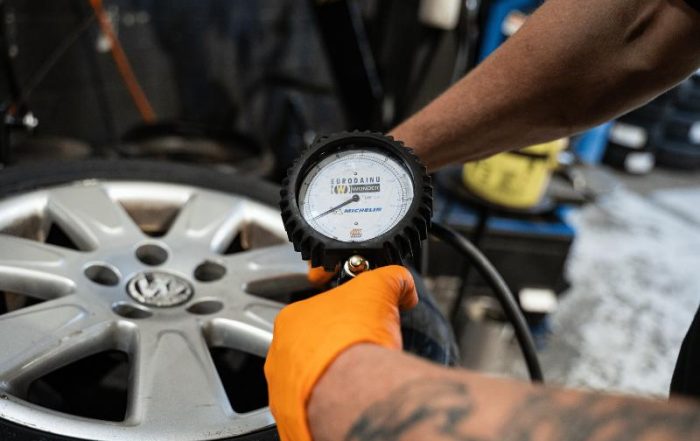
Most flat tyres can be avoided with a few simple habits. Check your tyre pressure once a month and keep it at the recommended level. Under-inflated tyres are far more likely to fail.
Replace tyres before the tread gets too low, especially heading into winter. Try to avoid potholes when you can, as they’re a common cause of punctures and wheel damage.
It also helps to get your alignment and wheel balancing checked once a year, and to inspect your tyres regularly for nails, cuts, or bulges. Catching small issues early can prevent sudden flats and keep you safer on the road.
Don’t risk further damage by driving on a faulty tyre.
Get In Touch With Our Team Today
Mon: 8:00-5:00pm
Tue: 8:00-5:00pm
- Wed: 8:00-5:00pm
- Thu: 8:00-5:00pm
- Fri: 8:00-5:00pm
Sat: 8:00-12:00pm
Sun: Closed